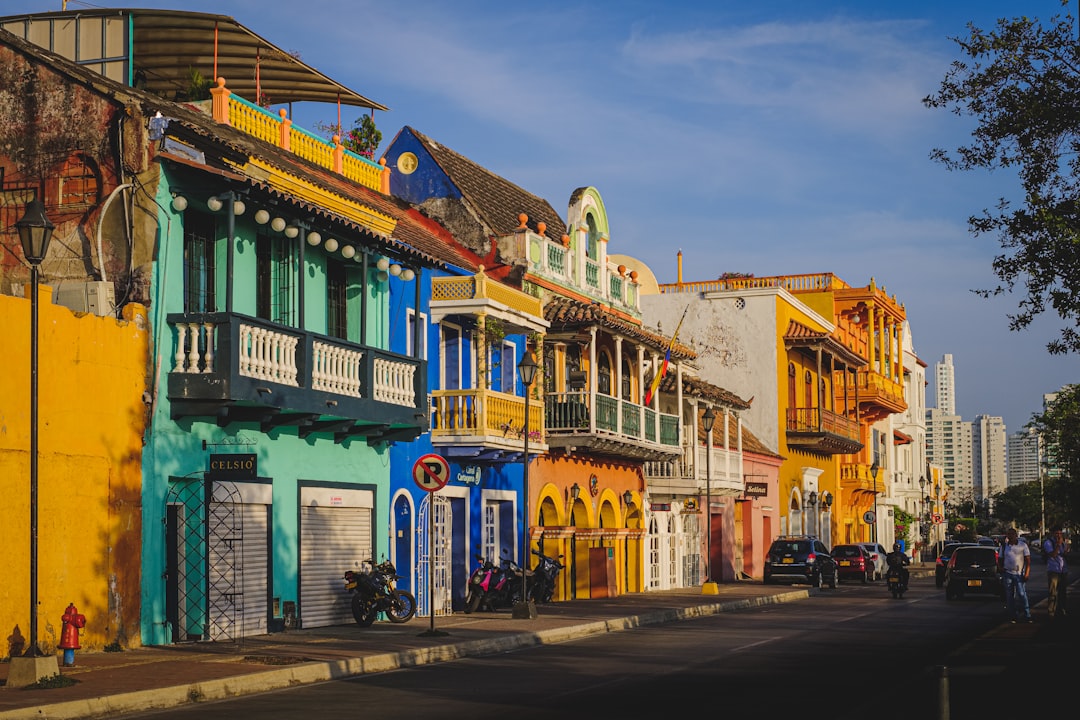
Short answer (as of ): Getsemaní is the best base in Cartagena for most travelers who are not on a honeymoon budget. It sits just outside the Old Town walls, a 10-15 minute walk to the Clock Tower, and runs 30-50% cheaper than the Walled City for equivalent quality. You get better food value, the city’s best nightlife around Plaza de la Trinidad, and street art on every block. The one real catch is noise: book two streets back from the plaza or you will hear music until the early hours. Stay in the Old Town instead only if you specifically want to sleep inside the postcard and price is not a concern.
Getsemaní at a glance
- What it is
- A working-class barrio just outside the walls, now Cartagena’s food-and-nightlife hub.
- Walk to the Walled City
- 10-15 minutes to the Clock Tower. Castillo San Felipe is 20-25 minutes on foot (about 5 by Uber); the island boat dock at Muelle La Bodeguita is around 15 minutes.
- Price vs the Old Town
- Roughly 30-50% less for equivalent accommodation, with cheaper food too.
- Best for
- Value seekers, solo travelers, foodies, nightlife, repeat visitors, anyone wanting a lived-in feel.
- Skip it if
- You want silence, a beach or pool at your door, or the full colonial-fantasy stay and budget is no concern.
- Safety
- Fine by day and evening on the main streets; take normal city precautions after midnight.
Should you stay in Getsemaní, or just visit?
Stay if value, food, or nightlife rank above quiet and colonial polish; visit only if you booked the Old Town for the walls and just want the street art and dinner. Both answers are valid, they serve different priorities.
Here is what the “just stay in the Old Town” guides skip: you pay a 30-50% premium inside the walls to be walking distance from the same restaurants you would reach from Getsemaní in ten minutes anyway. The trade you are making is money and local texture for polish and quiet. Getsemaní still has Colombians setting out plastic chairs two blocks from a $15-cocktail bar, and that mix is the point. It is what the Old Town lost.
Getsemaní vs the Old Town: which is the better base?
For most first trips: Getsemaní for value and life, the Old Town for convenience and quiet, and they are a 10-15 minute walk apart, so you get both either way. Pick by your top priority.
| Factor | Getsemaní | Old Town (Walled City) |
|---|---|---|
| Accommodation value | 30-50% cheaper (same quality) | Premium pricing |
| Walk to the Walled City | 10-15 min | you are in it |
| Vibe | lived-in, artsy, gentrifying | polished, touristy, postcard |
| Nightlife | best in the city (Plaza Trinidad) | quieter, upscale, retreats early |
| Noise at night | high near Trinidad, low two blocks back | low |
| Best for | value, food, nightlife, solo, repeat | first-timers, couples, convenience |
For the full base-by-base breakdown across every neighborhood, see our where to stay in Cartagena guide.
Is Getsemaní safe in 2026?
Yes for daytime and evening on the main streets; treat it like any city after midnight. Twenty years ago taxi drivers warned tourists away from here. Today thousands walk it nightly, and the tourist police cover the core.
The specifics matter more than the label. Right on and around Plaza de la Trinidad is the safest and busiest zone. The northern edges toward Parque Centenario get quieter and less watched, which is where petty theft happens. Pickpocketing and phone-snatching are the realistic risks, not violence against tourists. Keep your phone in a front pocket, do not wave it around on empty streets after 1 AM, and use Uber or InDriver for late returns instead of walking solo. Our full Cartagena safety guide has the block-level and scam detail.
Where is the street art, and is a tour worth it?
The street art is free and everywhere; a guided tour is worth it only if you want the stories behind the murals, and it runs roughly $15 shared to $45-51 private (2025-2026 operator listings, confirm before booking). You do not need a tour to see it. You might want one to understand it.
Self-guided, start at Plaza de la Trinidad and walk the umbrella streets on Calle de la Magdalena and Callejón Angosto, then the alleys off Calle del Espíritu Santo (look for the octopus mural) and the basketball-court walls on Calle Tripita y Media. If you want context, a graffiti walking tour covers 20-plus works with a local guide: a shared Walled City plus Getsemaní tour runs around $15 for two hours, while private street-art tours are roughly $45-51 per person. You can book the Getsemaní graffiti walking tour here. Prices shift, so confirm the current rate.
Where do you eat, drink, and go out in Getsemaní?
Getsemaní has Cartagena’s densest and best-value food-and-nightlife strip, and the night out is the street itself: Plaza de la Trinidad after about 6 PM. This is the reason to be here rather than inside the walls.
Evenings, the plaza fills with impromptu salsa circles and people on plastic chairs with a beer from the corner tienda, the cheapest and most local night in the city. For a venue, Café Havana is the neighborhood’s landmark salsa club (live bands, sweaty, worth doing once), with the club strip running along nearby Calle del Arsenal. Drop-in salsa lessons run about 20,000-30,000 COP ($6-10). One correction older guides get wrong: Bazurto Social Club moved to Plaza Santo Domingo in the Walled City in 2024, and the salsa institution Donde Fidel sits in the Old Town on Plaza de los Coches, not here, though it did start in Getsemaní back in 1985. The gentrification tell is the same on every block: $15 cocktail bars now sit next to hole-in-the-wall empanada spots, so your bill depends on which door you pick. Full detail in our Cartagena nightlife guide and food guide.
Which block should you actually book?
Book two to three streets back from Plaza de la Trinidad: same neighborhood, none of the 3 AM noise. The single most common Getsemaní complaint is sleep, and it is avoidable.
Streets directly on or beside the plaza stay loud until the early hours on weekends. Move a couple of blocks toward the quieter residential edges and you keep the walkability and the vibe without the bass through your wall. Budget travelers cluster in hostels near the action; if you want quiet, prioritize a room facing an interior courtyard and confirm the property has real air conditioning, which matters more than any view in Caribbean heat. Do not book a non-refundable room on the plaza to save a little, then lose two nights of sleep. See our Cartagena budget guide for how neighborhood choice moves your daily spend.
How do you get to Getsemaní and around it?
From the airport it is about a 10-20 minute ride (roughly 5 km); inside Getsemaní you walk everywhere, and the Old Town, castle, and island dock are all on foot. Location is Getsemaní’s quiet advantage.
📍 Where Getsemani is
Getsemani sits just outside the Old Town walls, a 10-15 minute walk to the Clock Tower.
Walking times from the neighborhood: the Old Town and Clock Tower are 10-15 minutes, Castillo San Felipe is 20-25 minutes (or about 5 by Uber), and the island boat dock at Muelle La Bodeguita is around 15 minutes, so you do not need a taxi for a Rosario Islands day trip. For anything farther or any late night, use Uber or InDriver, both of which show the price up front. See our getting around Cartagena guide for airport and transport specifics.
When Getsemaní is the wrong call
Getsemaní is not for everyone, and three groups should book elsewhere. Skipping this is how people end up in the wrong neighborhood.
Choose the Old Town or Bocagrande instead if any of these apply: you are a light sleeper who will not accept even occasional street noise, since the plaza carries; you want a beach or a pool-and-resort setup at your door, which Getsemaní has neither of and Bocagrande does; or you are here for the polished colonial-fantasy honeymoon and budget is not a factor. Getsemaní also has fewer large chain hotels, so travelers who need predictable, standardized rooms sometimes prefer Bocagrande.
The counterargument: is Getsemaní “ruined”?
A fair objection is that Getsemaní has gentrified past the point of being “authentic,” and there is truth in it, but “over” is too strong for 2026. The critique deserves a real answer.
Rents have risen, murals now share walls with cocktail bars, and some longtime residents have been priced out. If your test is “untouched,” Getsemaní failed it years ago. The counterpoint: it is still a place where locals actually live and gather nightly in the plaza, which is more than the Old Town can claim. The honest read is that you have roughly a couple more years before it tilts fully touristic, so the case for going now is stronger, not weaker.
The honest takeaway
Getsemaní is the pick for travelers who want real Cartagena texture, the best nightlife, and 30-50% more value than the walls, and who will book a quieter block to get it. It is not the pick for silence, beaches, or a frictionless luxury bubble. Choose your street deliberately, keep normal city sense after midnight, and it is the most rewarding base in the city.
Getsemaní FAQ
Is Getsemaní safe at night?
Yes on the main streets and around Plaza de la Trinidad, which stay busy and policed. After midnight, avoid the quiet northern edges alone and take Uber or InDriver for late returns.
Is Getsemaní cheaper than the Old Town?
Yes, roughly 30-50% less for equivalent accommodation, with cheaper food too, which is the main reason repeat visitors choose it over the Walled City.
How far is Getsemaní from the Walled City?
A 10-15 minute walk to the Clock Tower from most of the neighborhood. Castillo San Felipe is 20-25 minutes on foot.
Should you stay in Getsemaní or the Old Town?
Getsemaní for value, food, and nightlife; the Old Town for quiet and colonial convenience. They are a 10-15 minute walk apart, so day access to both is easy either way.
Do you need a tour to see the Getsemaní street art?
No, it is free and self-guided from Plaza de la Trinidad. A guided tour (about $15 shared to $45-51 private) adds the stories behind the murals.