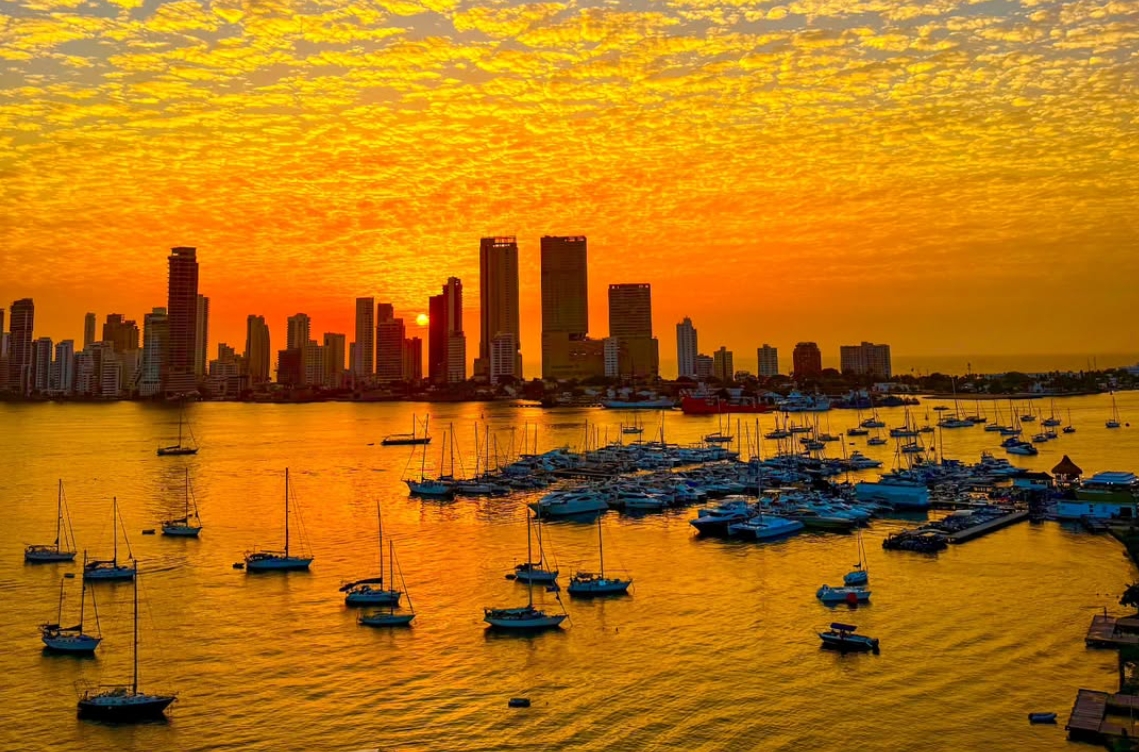
Short answer (as of ): A single person lives comfortably in Cartagena on about $900 to $1,400 a month, and the number is driven almost entirely by two things: which neighbourhood you rent in, and how much air conditioning you run. A one-bedroom apartment ranges from roughly 900,000 COP in Manga to 4,500,000 COP in Bocagrande, a spread of four times for the same size of flat. This is not the cheap Colombia people picture, and it is a different question from what a holiday here costs.

Cost of living in Cartagena at a glance
- Comfortable single budget
- About $900 to $1,400 a month including rent, food, utilities, transport and going out.
- Rent, one bedroom
- Roughly 1,900,000 to 3,600,000 COP citywide, from about 900,000 COP in Manga to 4,500,000 COP in Bocagrande.
- The hidden line item
- Air conditioning. It adds roughly 150,000 to 250,000 COP a month on top of base utilities, and it is not optional here.
- Local reality
- Average net salary is around 1,250,000 COP a month, so the foreigner economy and the local one barely overlap.
- Cheapest areas
- Torices, Pie de la Popa, Zaragocilla and inland residential districts.
- Not the same as
- The cost of a holiday here. Visitors pay hotel and restaurant rates; residents pay rent and grocery rates.
How much does it cost to live in Cartagena per month?
Plan on $900 to $1,400 a month as a single person living reasonably well, and roughly double that for a couple wanting space in a good area. The range is wide because rent is wide, not because lifestyles differ that much.
Below the bottom of that range you are living like a local on a local wage, which is possible but means an inland neighbourhood, no car, minimal air conditioning and eating what is in season. Above the top of it you are paying for Bocagrande or the walled centre, where you are competing with short-term rentals and holiday demand rather than with residents.
What does rent actually cost by neighbourhood?
A one-bedroom runs about 1,900,000 to 3,600,000 COP citywide, but the neighbourhood swings it by a factor of four. No other decision moves your monthly total this much.
| Area | Monthly rent, COP | Roughly, USD | Who it suits |
|---|---|---|---|
| Manga | 900,000 to 2,000,000 | $290 to $640 | Best value near the centre, residential, quiet |
| Getsemani | 1,200,000 to 2,500,000 | $380 to $800 | Walkable and social, noisy at night |
| Bocagrande | 2,200,000 to 4,500,000 | $700 to $1,440 | Beach and modern towers, highest prices |
| Torices, Pie de la Popa, Zaragocilla | Below 900,000 typical | Under $290 | Cheapest, local, further from tourist areas |
Furnished units aimed at foreigners sit at the top of every range, and in Bocagrande premium furnished flats climb far beyond it. Rents quoted in dollars are usually short-term listings. If you sign locally, in pesos, for a year, you are in a different market. Our neighbourhood guide describes what each area is like to be in, which matters more than the map suggests.
Why is air conditioning the line item nobody warns you about?
Because Cartagena is hot and humid every month of the year, as our month by month climate guide sets out, and running the air conditioning adds roughly 150,000 to 250,000 COP a month on top of normal utilities. This is the single biggest difference from living in Medellin or Bogota.
Base utilities for a typical apartment run around 490,000 COP a month covering electricity, water and rubbish. Add air conditioning used the way most foreigners actually use it, and the bill climbs sharply. People who budget for Colombia using national averages get this wrong every time, because the national average is built on cities in the mountains where nobody needs cooling. Ask about the previous tenant’s electricity bills before you sign anything, and check whether the flat has ceiling fans, cross ventilation and shade, because those three things decide the size of the bill.
I have never once heard a foreigner in Cartagena complain that rent was higher than expected. I have heard plenty complain about the first electricity bill.

What do groceries and eating out cost?
Groceries run about $200 to $600 a month depending on how local you shop, and a set lunch still costs around 5 dollars. Food is where the gap between tourist prices and resident prices is widest.
Shopping at neighbourhood markets and buying what is in season keeps you at the bottom of that range. Buying imported goods at Exito or Carulla pushes you to the top quickly, and imported cheese, wine and breakfast cereal are the usual culprits. Eating the almuerzo, the fixed-price set lunch of soup, main, juice and something sweet, is the single best cost habit in Colombia, and it is the same meal locals eat. Restaurant dinners in the walled centre are priced for visitors and will undo a week of careful shopping in one evening.
My own rule after months here was simple: eat lunch where the taxi drivers eat, and keep the Old Town for evenings when I actually wanted the setting rather than the food.
Is Cartagena expensive compared with the rest of Colombia?
Yes. Cartagena is the most expensive city in Colombia for foreigners, and it pairs that with some of the lower local wages. The “cheap Colombia” reputation comes from other cities.
The average net salary here is around 1,250,000 COP a month, which is roughly what a one-bedroom flat costs in a mid-range area. That arithmetic tells you why the foreigner economy and the local one barely touch, and why prices in tourist zones bear no relation to what people nearby earn. If your priority is stretching a budget in Colombia, Medellin, Bucaramanga or Pereira do it better. If your priority is the Caribbean, you pay for the Caribbean.
How is this different from what a holiday costs?
Completely, and comparing the two is the most common budgeting mistake. A visit is priced in nightly hotel rates, restaurant meals and tour tickets; living here replaces all three.
Our Cartagena trip budget guide puts a comfortable visitor day at $120 to $200, which is $3,600 to $6,000 a month. Nobody lives on that. The daily figures in a travel budget are a ceiling for residents, not a guide, because visitors pay tourist rates on the two largest items, accommodation and food, and residents mostly do not.
Where the two overlap is leisure. Residents still take the same boat trips and day tours as visitors, a Rosario Islands day trip costs a resident exactly what it costs a tourist, just less often, and they pay the same prices for them.
What else should you budget for?
Transport is cheap, health insurance is not optional, and the deposit will be larger than you expect. These three catch people out.
- Transport: short taxi and app rides within the city are inexpensive, and most residents skip owning a car, and taking a taxi after dark is normal practice here rather than a splurge, which our safety guide explains. Our transport guide covers the options and typical fares.
- Health cover: foreigners on a visa join the Colombian system or buy private cover. Budget for it from month one rather than treating it as optional.
- Deposits and guarantors: Colombian leases often want several months up front or a local guarantor, which is a real barrier for new arrivals and pushes many into pricier furnished rentals at first.
- Internet and phone: a modest fixed cost, and fibre is available in most central neighbourhoods.
- Humidity tax: not a real tax, but budget for replacing shoes, leather and electronics faster than you would in a dry climate.
When Cartagena is the wrong choice financially
Skip it if you are optimising for cost, working remotely on a tight budget, or expecting Colombian prices you read about elsewhere. There are better value cities in the same country.
You will pay a premium here for heat you have to cool, tourism that inflates central rents, and an economy built around visitors. If your income is fixed and modest, that premium buys you the Caribbean and not much else. If you need a large flat, a car and imported groceries, the gap widens further.
The counterargument: is the premium worth paying?
For plenty of people yes, and the honest version of that answer is not about money at all. Cheaper cities exist and none of them are this.
Cartagena gives you the Caribbean, a walkable historic centre that people travel across the world to see, and warm sea a short ride away all year. Nobody moves to Manga to save money against Bucaramanga. The mistake is not choosing Cartagena, it is choosing it while expecting the numbers from a cheaper city and then being surprised by the electricity bill.
The honest takeaway
Budget $900 to $1,400 a month as a single person, pick your neighbourhood before anything else because it swings rent fourfold, and treat air conditioning as a fixed cost rather than a surprise. Sign in pesos and locally if you can, eat the almuerzo, shop where your neighbours shop, and keep the tourist centre for evenings out rather than daily life. Cartagena is not cheap Colombia. It is the Caribbean, priced accordingly.
Cost of living in Cartagena FAQ
How much money do you need per month in Cartagena?
About $900 to $1,400 a month for one person living comfortably, covering rent, utilities, groceries, transport and going out. A couple wanting more space in a central area should plan on roughly double, as of August 2026.
How much is rent in Cartagena?
A one-bedroom runs roughly 1,900,000 to 3,600,000 COP a month citywide. Manga starts near 900,000 COP, Getsemani runs 1,200,000 to 2,500,000, and Bocagrande reaches 4,500,000 and beyond for premium furnished flats.
Why are electricity bills so high in Cartagena?
Air conditioning. The climate is hot and humid year round, and cooling adds roughly 150,000 to 250,000 COP a month on top of base utilities of around 490,000 COP. National Colombian averages do not include this, because most Colombian cities do not need cooling.
Is Cartagena cheaper than Medellin?
No. Cartagena is the most expensive Colombian city for foreigners, mainly because of tourist-driven rents in central areas and year-round air conditioning. Medellin, Bucaramanga and Pereira stretch a budget further.
What is the average salary in Cartagena?
Around 1,250,000 COP a month net, which is close to what a mid-range one-bedroom apartment costs. That gap explains why prices in tourist areas bear little relation to local incomes.